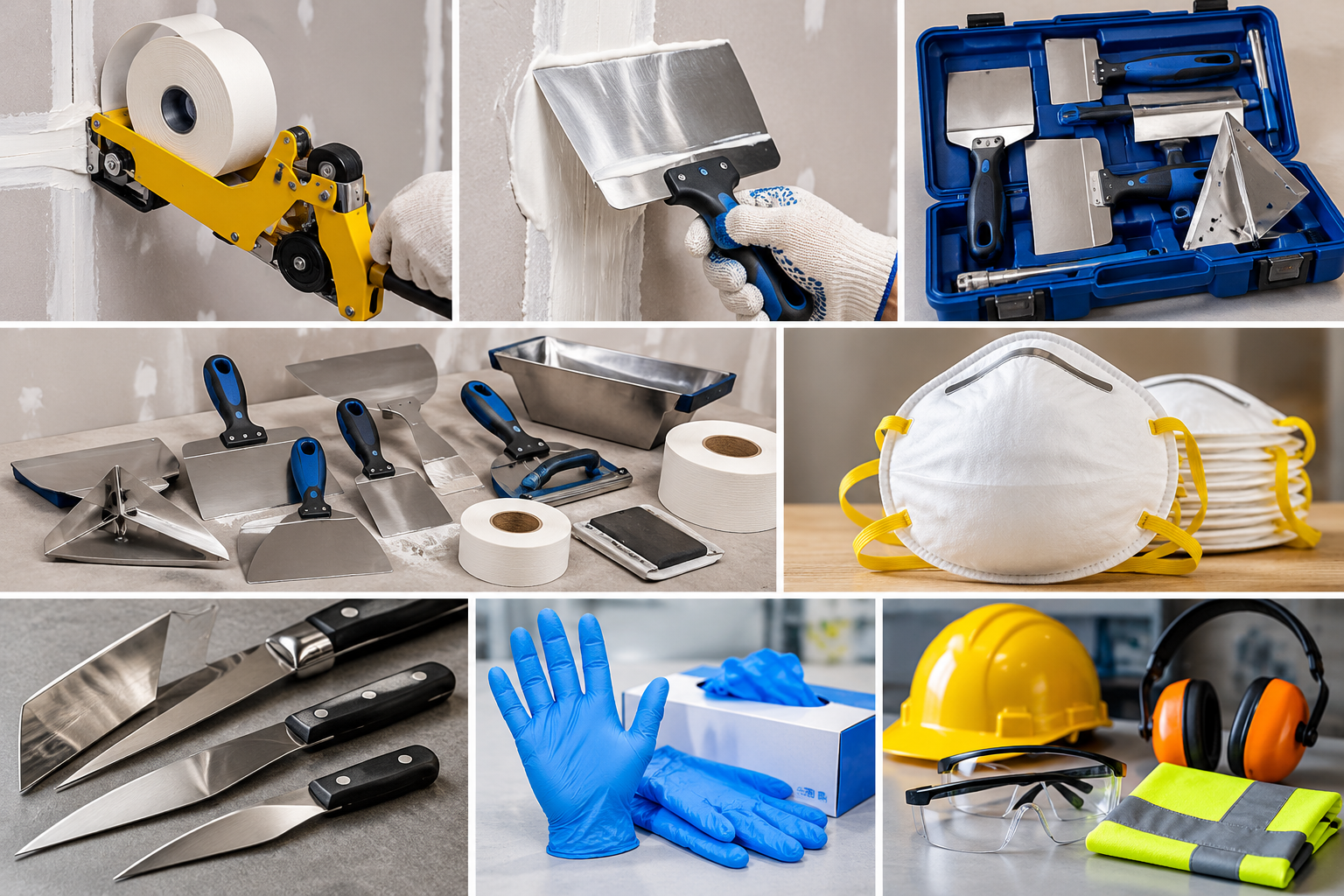
Applying drywall tape accurately is one of the most important steps in creating smooth interior walls. The tape reinforces panel joints and helps reduce the likelihood of visible cracking when installed correctly.
Traditional hand taping requires workers to apply compound and position reinforcing tape in separate movements.
A drywall taping banjo combines these operations through a handheld dispensing mechanism, making it useful for repeated joint taping.
What Is a Drywall Taping Banjo?
A drywall taping banjo is a handheld tool designed to apply joint compound to reinforcing tape as the tape passes through the device.
The prepared tape can then be positioned along drywall seams.
The tool is commonly used with compatible paper joint tape, although suitability depends on the specific equipment design.
Understanding the Basic Mechanism
The device contains a compartment for joint compound and a pathway for reinforcing tape.
As the worker pulls the tape through the mechanism, compound coats the tape according to the tool’s configuration.
The coated tape is then applied to the drywall joint.
Some designs include adjustments that influence compound distribution.
Why Taping Consistency Matters
Properly embedded tape strengthens the joint treatment and helps create a stable surface for subsequent finishing coats.
Uneven compound coverage can lead to poor adhesion, bubbles, or other defects.
A drywall taping banjo can support repeatable application when compound consistency and equipment settings are appropriate.
Reducing Separate Application Steps
The tool combines compound coating and tape dispensing.
This may reduce the number of separate movements required during repeated joint taping.
Maintaining Controlled Tape Preparation
Consistent coating helps workers prepare tape for embedding.
However, the tape still needs to be pressed into the joint correctly.
The banjo does not eliminate the need for careful embedding and inspection.
Choosing the Right Drywall Taping Banjo
Evaluate Handling Comfort
The tool must be carried and guided during operation.
Consider its weight, grip design, and balance when filled with compound.
Comfortable handling can help maintain control during longer taping sessions.
Check Tape Compatibility
Different designs may accommodate particular tape widths or materials.
Always confirm the equipment specifications before use.
Consider Cleaning Requirements
Compound can harden inside the dispensing compartment and tape pathway.
A design that allows convenient access simplifies cleaning.
How to Use a Drywall Taping Banjo
Step 1: Prepare the Compound
Mix the joint compound according to the material instructions.
Ensure it is suitable for the intended application and equipment.
Step 2: Load the Tape
Thread the reinforcing tape through the designated pathway.
Confirm that it moves freely without twisting.
Step 3: Fill the Compartment
Add an appropriate amount of compound.
Avoid overfilling, which may make handling difficult or cause unnecessary leakage.
Step 4: Apply the Coated Tape
Pull the tape through the device and position it along the drywall joint.
Maintain consistent movement to support even coverage.
Step 5: Embed the Tape
Use a suitable taping knife to press the tape into the compound.
Remove excess material while ensuring adequate compound remains beneath the tape.
Common Taping Problems
Insufficient compound may cause poor tape adhesion.
Excess compound can create unnecessary buildup.
Twisted tape may produce wrinkles or uneven joints.
Incorrect compound consistency can also interfere with dispensing.
Inspect the first completed section before continuing.
Cleaning and Storage
Empty remaining compound after use.
Clean the internal compartment, tape pathway, and dispensing surfaces.
Allow components to dry appropriately before storage.
Inspect moving parts for damage or buildup.
Conclusion
A drywall taping banjo can simplify joint taping by combining compound coating and tape dispensing into one process.
Its effectiveness depends on proper loading, suitable compound consistency, and careful tape embedding.
With consistent technique and regular maintenance, the tool can support efficient drywall taping while helping workers achieve reliable joint preparation.